Mental by NoLimit City: a slot review with unusually complex bonus rules
Mental is one of those NoLimit City releases that rewards patience, because the headline features only make sense once you understand how they stack. The game is built around symbol-level multipliers, split mechanics, and a three-tier bonus structure that can upgrade itself mid-feature. It’s also an “extreme volatility” title with an official max win cap of 66,666x, so the sensible approach is to treat it as a high-risk entertainment game rather than something to “grind”.
Core setup: layout, ways, and what the RTP figure really means
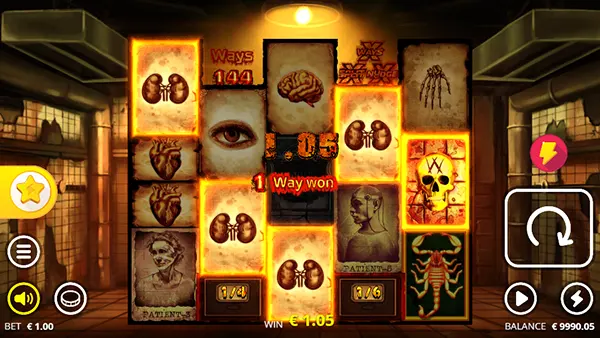
Mental runs on a 3-2-3-2-3 reel layout and is commonly listed with 108 ways to win, depending on how the engine is presented by the operator. The key point for players isn’t the label (ways/lines), but the fact that the grid can be “re-shaped” through mechanics that add symbol instances and split them, which changes how often you connect wins.
The widely quoted RTP sits around 96.06–96.09%, but in 2026 you still need to read the game info panel before you stake real money, because Mental supports adjustable RTP settings in many jurisdictions. That means two people can both be “playing Mental” at the same stake and volatility level, while the long-run return differs because the operator has chosen a lower RTP configuration.
Volatility is where the game makes its intentions clear. Mental is marketed and reviewed as extremely volatile, with long dry spells being normal. If you’re budgeting for a session, it’s better to think in terms of “how many spins can I afford to lose” than “how close am I to a bonus”, because the bonuses themselves can also be low-impact if the right stacking conditions don’t arrive.
Fire Frames, xSplit, and why “more symbols” is not automatically better
Fire Frames can appear on base spins and, in bonus rounds, they can become sticky. When a symbol lands inside a framed position, it can be split (xSplit-style behaviour), effectively creating additional matching potential on the same spin. In plain terms: the game tries to multiply your chances to connect, but it does it in a way that can still produce tiny wins when low-value symbols are involved.
What matters is which symbols get split, and when. If Fire Frames mostly catch low-paying icons, your bankroll gets “kept alive” with small returns, but you’re not building the type of hit that offsets the volatility. When frames land around premium symbols (patients), the same splitting logic becomes genuinely dangerous in a good way, because it increases the chance of a meaningful connection on the very spins where multipliers can also be present.
Also, don’t confuse extra symbol instances with guaranteed momentum. Splits and extra ways increase possibilities, not certainty. Mental is designed so that several mechanics can fire without producing a headline result, and that’s part of why the rules feel strict: you need overlap, not just activity.
The multiplier engine: Dead Patient and the “symbol multiplier” trap
Mental’s biggest talking point is Dead Patient. When two Dead Patient symbols land, one can convert into a premium patient symbol carrying a random multiplier that typically ranges from x5 upward, with rare spikes reported as high as x9,999. The multiplier attaches to that symbol’s contribution, which is why outcomes can look inconsistent: the multiplier isn’t a general win multiplier applied to everything, it’s tied to how that symbol participates in a win.
This is a common misunderstanding with complex NoLimit City titles. A “symbol multiplier” is only as valuable as the win it becomes part of. If the multiplied patient symbol doesn’t connect in a meaningful way, the multiplier can feel wasted. When it does connect, the same mechanic can create the kind of single-spin swing that defines the game’s reputation.
Another important rule detail is the hard cap behaviour. Mental’s max payout is set to 66,666x the base bet, and when that cap is hit the round ends immediately. Practically, that means the engine has a ceiling and will stop rather than continue tallying if an extraordinary chain would theoretically exceed the cap.
Enhancer Cells: modifiers that change odds, not guarantees
Enhancer Cells are essentially “boost tiles” that can appear when enough Fire Frames show up (commonly described as thresholds such as 4 or 6 frames). Their job is to increase the chance of extra mechanics appearing, including variants of xWays, xSplit, and other boosters that can make the reels behave less predictably.
The best way to think about Enhancer Cells is that they raise your exposure. They don’t promise a win, but they make it more likely that something complex happens on the spin. In a low-volatility game, that might be comforting; in Mental, it can be a double-edged sword because complexity can still end in a small payout while consuming a lot of spins getting there.
If you’re trying to understand your results, track when Enhancer Cells were present and what they actually produced. Players often remember the “busy” spins and forget that busy spins can still be net-negative. Mentally separating “feature activity” from “value created” helps you keep a realistic read on the game.
The three-tier free spins structure: Autopsy, Lobotomy, and Mental Free Spins
Mental’s bonus rounds are presented as a three-step ladder. Autopsy Free Spins is the entry feature, typically triggered via scatters (often described as scorpion symbols) and it includes sticky Fire Frames, which keeps the split potential alive across multiple spins. It’s the most straightforward of the three, and in many sessions it’s the one you’ll see most often.
Lobotomy Free Spins is an upgraded version of Autopsy. It adds a sticky Spider symbol element and forces more frequent symbol transformation behaviour, which makes the round feel “denser”. It’s also where multiplier transfers become more central, because the game is trying to set up premium symbol connections rather than just create extra ways.
Mental Free Spins is the top tier and the one most players talk about afterwards. It’s described as the point where Spider symbols are sticky and, crucially, the Dead Multiplier effects do not decrease after transferring to patient symbols. In practice, that rule is what creates the rare “this got out of hand” outcomes, but it’s also why long stretches of nothing can happen before a meaningful sequence finally lines up.
Feature Buy in 2026: costs, restrictions, and responsible use
Mental includes a buy-feature option (“NoLimit Bonus”) that can drop you directly into different bonus tiers at prices that are usually quoted in a wide range (for example, from around 80x up to 1,000x of your base bet depending on the chosen bonus). In 2026, availability still depends on regulation: in some markets the buy option is removed entirely, and even where it exists, it may be limited to specific tiers.
If you do use Feature Buy, treat it as a separate budget decision, not a shortcut to the “real game”. Buying into a volatile bonus can compress losses into a short timeframe. The sensible approach is to decide in advance how many buys you can afford to lose without chasing, because chasing buys in an extreme-volatility title is one of the fastest ways to turn entertainment into a problem.
Finally, a practical note: because Mental can run with adjustable RTP configurations and different feature availability, you should always check the in-game information screen for the exact RTP setting and which bonus tools are enabled on that specific operator. That single check does more for “fair expectations” than any generic review, including this one.