Stockholm Syndrome (Nolimit City): How the Key Modifiers Work and Why Players Call It a “Brutal” Volatility Slot

Stockholm Syndrome by Nolimit City is a modern high-volatility slot built around modifier stacking rather than steady base-game payouts. It is known for long quiet phases followed by short bursts of extreme potential, which is why many players describe it as “brutal” in practice. The game remains popular in 2026 because its core mechanics are not decorative: wild systems, word modifiers, and bonus structures actively reshape reel behaviour and define the risk level of every session.
Base Game Structure: Why the Slot Feels Tight Before It Turns Dangerous
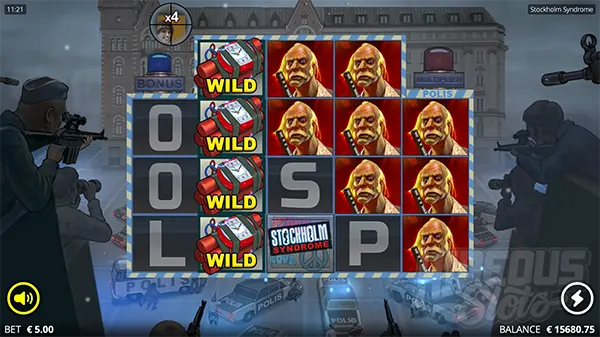
Stockholm Syndrome uses a 5-reel layout with a 3-4-3-4-3 row setup and 432 ways to win. In the most common configuration, the RTP is typically listed at 96.08%, though multiple RTP versions may exist depending on the operator and jurisdiction. Even with a standard RTP, the gameplay can feel restrictive because return is distributed unevenly, with many spins offering minimal or no payoff.
In the base game, many “exciting” moments are not actual wins but setups. The slot is designed so that certain symbols and mechanics appear to build anticipation, yet they only become valuable when they connect with specific cascades or reel outcomes. This design choice increases perceived volatility because players can experience frequent teasers without meaningful balance growth.
Another factor that contributes to the tight feel is that base wins often do not compensate for the downtime between feature activations. The game’s underlying model prioritises rare high-impact outcomes over frequent medium hits, which makes short sessions unreliable. For players, this creates a clear pattern: the slot either stays quiet or suddenly over-delivers when several mechanics align.
Two Wild Systems That Change the Whole Dynamic: xBomb Wild and Con Man Wild
The xBomb Wild works as a swing mechanic. When it lands, it can introduce multiplier potential that dramatically changes the value of connected wins. However, it does not automatically guarantee strong returns, because the wild still needs to connect with the right symbol placements or cascade sequence to create real impact.
The Con Man Wild adds another layer of volatility because it can influence reel outcomes in a way that encourages stronger setups. It can be valuable when it appears during an active sequence, but it can also land at low-value moments and feel wasted. That variability makes the mechanic exciting, but it also reinforces why the game is considered high-risk.
Together, these wild systems create a slot where “big moments” often function as preparation rather than reward. Players may see visually strong mechanics that do not immediately translate into strong payouts. The result is a gameplay loop where the most profitable outcomes depend on timing and overlap rather than one single trigger.
The Word-Based Modifiers: POLIS, SOS, and PISS as Value-Shifting Engines
One of the defining features of Stockholm Syndrome is its use of word-based modifiers. These mechanics operate through letter symbols that can assemble sequences such as POLIS. When completed, they can trigger additional actions or modify reel behaviour, which increases the chance of reaching higher-value states.
SOS and PISS function in a similar direction, acting as transformation-style modifiers that can reshape what happens on the reels. The key point is that these systems are not simple “collect for bonus” mechanics. They often appear in fragments without immediate payoff, which makes the slot feel more volatile because progress is not consistently rewarded.
These modifiers also introduce layered variance. The game’s strongest outcomes are more likely when multiple modifier types overlap within the same sequence. Instead of one straightforward bonus path, the slot creates scenarios where one mechanic can amplify another, but only under the right timing. When that overlap fails, returns can feel underwhelming even during feature activity.
Why These Modifiers Increase Dispersed Payouts Instead of Stabilising Them
In many slots, collecting symbols is designed to stabilise returns by providing frequent mini-rewards. In Stockholm Syndrome, the modifier system behaves more like an accelerator. It increases the potential ceiling, but it does not guarantee a steady stream of mid-level payouts.
This is why players often describe the slot as harsh: a modifier can trigger, and the visuals suggest a powerful shift, but the final return still depends on what lands immediately after. When the follow-up reels do not cooperate, the modifier activation can feel like a near-miss rather than a win event.
When everything connects, the results can be exceptional. But most of the slot’s RTP is concentrated into comparatively rare stacked moments. This creates the “all or nothing” profile that high-volatility players often seek, but it also explains why bankroll management becomes important if someone plays the game for extended sessions.
Bonus Rounds: Hostage Spins vs Syndrome Spins and the Real Reason the Slot Swings
The slot includes two main bonus rounds: Hostage Spins and Syndrome Spins. Both aim to elevate the game beyond base volatility by adding additional mechanics and increasing the possibility of large multipliers. However, each bonus behaves differently, which means players can experience very different outcomes even when the trigger frequency feels similar.
Hostage Spins tends to focus on escalation through evolving behaviour. It can produce solid wins, but it often relies on upgrades landing early enough to build momentum. If those upgrades arrive late, the bonus can finish before it reaches its highest-value stage, which is why some players consider it inconsistent.
Syndrome Spins is generally associated with the highest potential peaks. This bonus can create more aggressive modifier interaction and higher reward potential, but it can also be surprisingly flat if the reels do not align with the active mechanics. That contrast is part of what makes the slot feel extreme: even the “best” feature can end with a low return.
Why the Slot Is Considered “Brutal” on Volatility: The Modifier Stack Problem
The biggest payouts in Stockholm Syndrome usually require stacking: multipliers, wild behaviour, reel transformations, and strong symbol hits must overlap within a short window. Each individual element is achievable, but the game is tuned so that high-value stacks remain scarce.
This design causes a major swing in session results. Two players can trigger the same bonus and have completely different returns depending on whether the modifier stack forms. That is why the slot is not measured well by hit rate alone — the session outcome is often decided by one or two rare events.
In 2026, Stockholm Syndrome is still frequently mentioned in discussions about modern high-risk slot design because it uses modifiers as the main driver of value. The game can be rewarding, but it is not forgiving. If the stack aligns, the payout potential can be huge; if it does not, the experience can feel strict and financially demanding.